

Why Your Desk Setup Might Be Causing Your Pain
If you work at a desk, you probably sit for 6–10 hours per day.
Now multiply that by:
- 5 days per week
- 50 weeks per year
- Several years in a row
That’s thousands of hours in the same posture.
At Conquer Movement Physical Therapy, we regularly see patients dealing with:
- Neck pain
- Shoulder tightness
- Mid-back stiffness
- Low back pain
- Hip discomfort
- Wrist and elbow irritation
- Headaches
And many times, the root cause isn’t a traumatic injury.
It’s prolonged sitting with poor ergonomics.
The good news? Most desk-related pain is highly fixable.
In this guide, we’ll break down:
- What prolonged sitting actually does to your body
- Why posture alone isn’t the full story
- How to set up your desk properly
- Simple movement strategies that prevent long-term damage
- When to seek help from a performance physical therapist
Let’s make this practical and easy to apply.
What Happens to Your Body When You Sit Too Long?
Sitting itself isn’t evil.
But staying in one position too long is.
Your body is designed for movement. When you hold a static posture for hours, several things happen:
1. Muscles Tighten
Hip flexors, chest muscles, and upper traps shorten over time.
2. Muscles Weaken
Glutes, deep core muscles, and mid-back stabilizers become underactive.
3. Joint Compression Increases
Sustained pressure builds in:
- Lumbar discs
- Cervical spine
- Shoulder joints
4. Blood Flow Slows
Reduced circulation leads to stiffness and fatigue.
5. The Nervous System Stays “On”
Chronic stress + forward head posture often equals tension headaches and jaw tightness.
Over time, this creates a pattern of:
- Pain
- Limited mobility
- Reduced performance
- Slower recovery
This isn’t just a comfort issue — it’s a performance issue.
Posture Isn’t the Villain — Lack of Movement Is
You’ve probably heard:
“Sit up straight!”
But here’s the truth:
There is no perfect posture you can hold all day.
The best posture is the next posture.
Instead of chasing perfection, we focus on:
- Reducing sustained stress
- Improving positioning
- Building resilience
- Encouraging movement variability
Let’s walk through how to set up your workstation the right way.
The Ideal Desk Setup (Simple and Practical)
1. Monitor Position
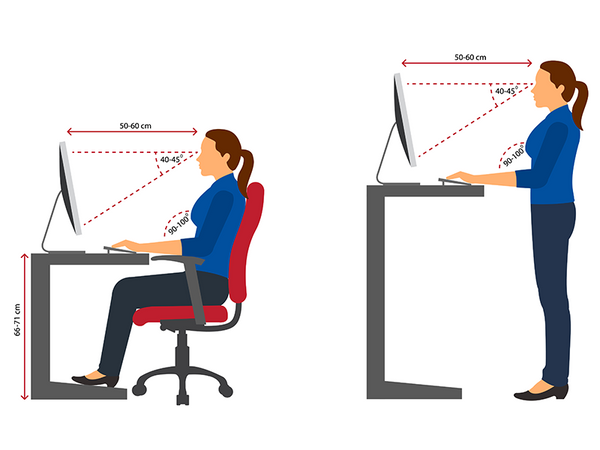
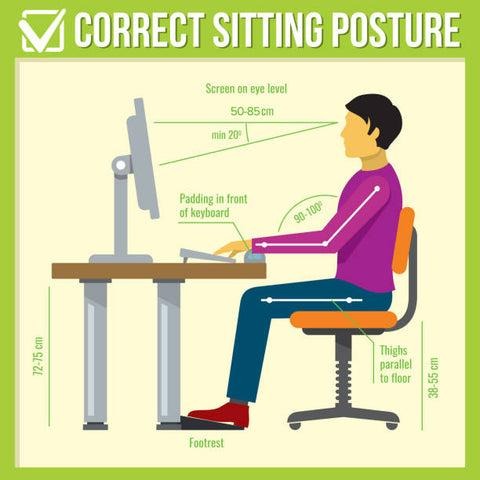
Your screen should be:
- At eye level
- About an arm’s length away
- Centered directly in front of you
If your monitor is too low:
- You flex your neck forward
- Upper traps stay active
- Headaches become common
If you use a laptop:
- Use a laptop riser
- Add an external keyboard
Small adjustment. Huge impact.
2. Chair Height and Support
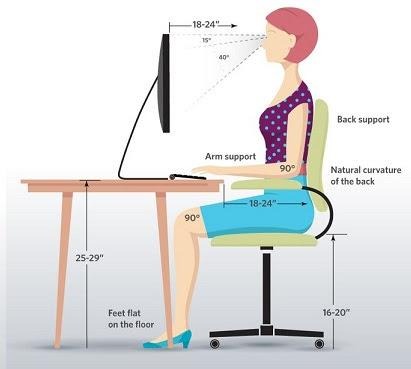
Your chair should allow:
- Feet flat on the floor
- Knees at ~90 degrees
- Hips slightly higher than knees
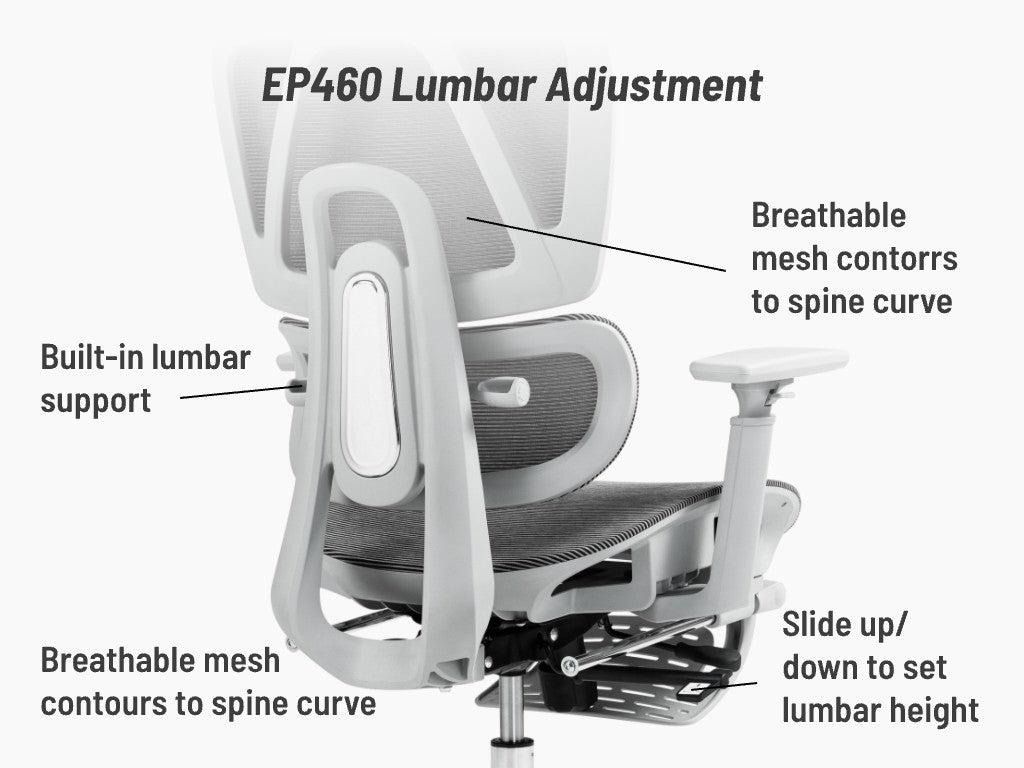
- Natural lumbar curve supported
If your low back rounds all day:
- Disc pressure increases
- Core muscles disengage
- Low back pain develops
If needed:
- Add a small lumbar roll
- Adjust armrests so shoulders stay relaxed
3. Keyboard and Mouse Position
Your elbows should rest:
- Close to your body
- At about 90 degrees
Wrists should stay:
- Neutral
- Not bent upward or downward
Poor wrist positioning contributes to:
- Wrist pain
- Forearm tightness
- Numbness or tingling
If your shoulders are shrugged all day, your desk is too high.
The Real Solution: Movement Snacks
Even with a perfect setup, you cannot sit still for 8 hours.
We recommend:
- Stand up every 30–45 minutes
- Walk for 1–2 minutes
- Perform 2–3 quick mobility drills
Think of these as movement snacks.
Here are a few favorites we teach patients:
1. Thoracic Extension Stretch
- Interlace fingers behind head
- Gently extend over chair back
- 5–8 reps
2. Hip Flexor Reset
- Stand tall
- Squeeze glutes
- Step one foot back
- 30 seconds per side
3. Scapular Retractions
- Sit tall
- Pull shoulder blades back and down
- 10 reps
These small resets:
- Improve blood flow
- Reduce stiffness
- Lower inflammation
- Improve focus
Common Desk-Related Pain Patterns We See
At Conquer Movement, these are the most common patterns:
Neck Pain + Headaches
Forward head posture + elevated shoulders.
Shoulder Impingement
Rounded shoulders + poor scapular control.
Low Back Pain
Posterior pelvic tilt + weak core stabilization.
Hip Tightness
Prolonged hip flexion + glute inhibition.
Wrist & Elbow Pain
Poor mouse mechanics + overuse.
The key isn’t just stretching tight muscles.
It’s restoring:
- Strength
- Control
- Movement quality
Ergonomics and Systemic Stress
Desk posture doesn’t just affect muscles.
It affects your nervous system.
Prolonged sitting:
- Reduces circulation
- Decreases lymphatic flow
- Increases stress hormone output
- Contributes to low-grade inflammation
If you enjoyed our previous article on stress and inflammation, you’ll appreciate how posture ties into the bigger picture of recovery and resilience.
Your body adapts to the positions you live in.
Make sure those positions support your health.
Simple Daily Checklist
Use this quick checklist:
✔ Monitor at eye level
✔ Feet flat on floor
✔ Elbows at 90°
✔ Shoulders relaxed
✔ Move every 30–45 minutes
✔ Strength train 2–3x per week
That last one matters.
Strength training builds resilience against postural stress.
When Desk Pain Doesn’t Go Away
If you’ve:
- Bought the new chair
- Adjusted your desk
- Tried stretching
- Taken anti-inflammatories
And the pain still returns…
That means the issue is deeper than posture.
You may need:
- Movement retraining
- Strength progression
- Nervous system regulation
- Load management guidance
This is where a performance physical therapist can help.
We assess:
- How you move
- How you breathe
- How your joints load
- Where compensation patterns exist
Then we build a plan to correct it.
Why This Matters for Long-Term Health
Desk-related pain isn’t just uncomfortable.
Left unaddressed, it can lead to:
- Chronic neck and back conditions
- Recurrent shoulder injuries
- Disc irritation
- Reduced exercise tolerance
- Decreased productivity
You deserve to feel strong — not stiff — at the end of your workday.
Final Thoughts
Sitting isn’t the enemy.
Staying still is. Remember, Motion is Lotion and Movement is Medicine.
Small changes to your desk setup combined with intentional movement and strength training can dramatically reduce pain and improve performance.
You don’t need perfection.
You need consistency.
Ready to Fix the Root Cause?
If you’re experiencing:
- Persistent neck or back pain
- Shoulder discomfort during workouts
- Numbness or tingling
- Hip stiffness that won’t resolve
- Headaches related to computer work
Let’s address it properly.
A Discovery Call at Conquer Movement Physical Therapy in Wilmington, NC allows us to:
- Understand your pain pattern
- Identify movement limitations
- Determine if physical therapy is right for you
- Build a personalized recovery plan
👉 Schedule your free Discovery Call today and start moving without pain.
Dr. Matt Davis, DPT
Doctor of Physical Therapy
Conquer Movement Physical Therapy – Wilmington, NC