
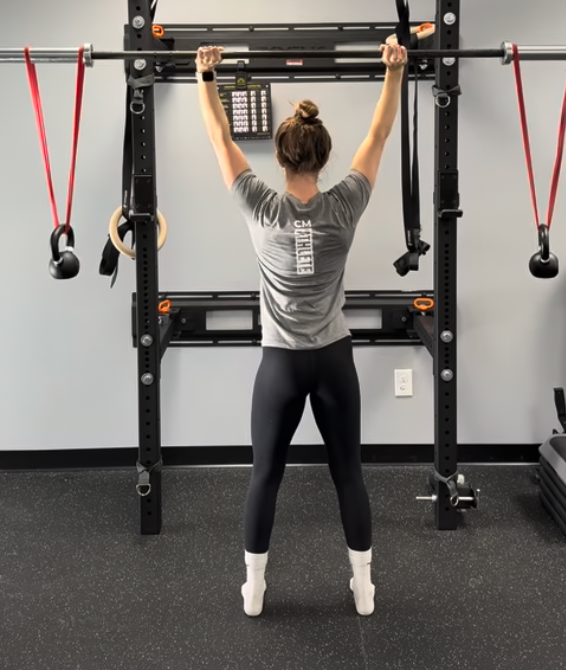
It Didn’t Hurt During Training, So Why Does It Hurt Now?
Have you ever finished a workout feeling fine, only to notice pain or stiffness hours later or even the next day? Maybe your back didn’t hurt while you were lifting, but it felt tight or sore that evening, or your shoulder felt good during training, then became uncomfortable once you sat down. This is a common experience in active adults and athletes, and it is something we often refer to as latent pain. Latent pain does not mean you injured yourself after the workout. Instead, it is your body’s way of giving delayed feedback about how it handled the load. The discomfort appears later, often after activity, once fatigue sets in or recovery begins. This indicates that your body was able to complete the task, but it had to work harder and/or compensate to do so.
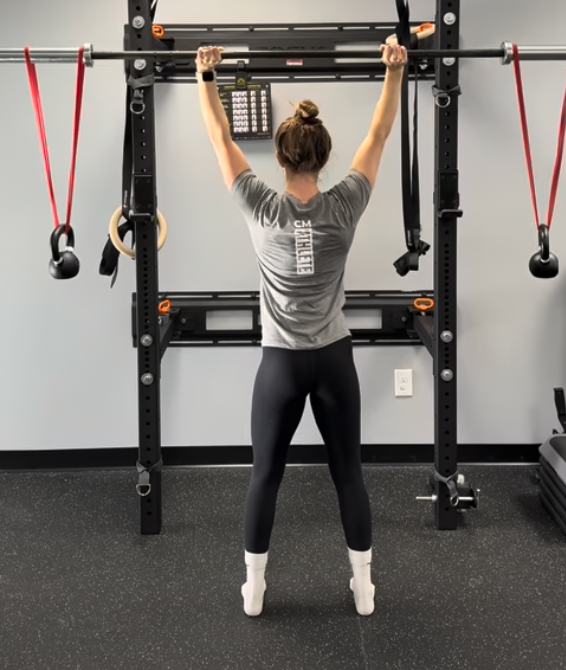
Think of latent pain as delayed feedback rather than an emergency alarm.
Why Pain Can Be Less Noticeable During Exercise
During exercise, your body has built-in systems that temporarily reduce pain sensitivity. Your brain releases natural pain-relieving chemicals such as endorphins, endocannabinoids, and enkephalins. Together, these create what is known as exercise-induced hypoalgesia, meaning your nervous system turns the volume down on pain while you are moving.
At the same time, blood flow increases, adrenaline rises, and your nervous system is focused on coordination and output rather than internal warning signals. Even if tissues are being stressed, the brain may interpret the activity as safe enough in the moment.
Once the workout ends, those pain-dampening effects fade, but fatigue and tissue stress remain. That is when symptoms often become noticeable.
Fatigue and the Cost of Compensation
As muscles fatigue, coordination becomes less precise. Smaller stabilizing muscles often tire first, which means larger or more dominant muscles begin to take over tasks they are not designed to handle for long periods of time.
This allows you to keep moving and finish the workout, but it is metabolically expensive and mechanically inefficient. Think of this like running up a tab on a credit card. During your workout, your body may borrow stability or control from areas that are not meant to be the primary source of support.
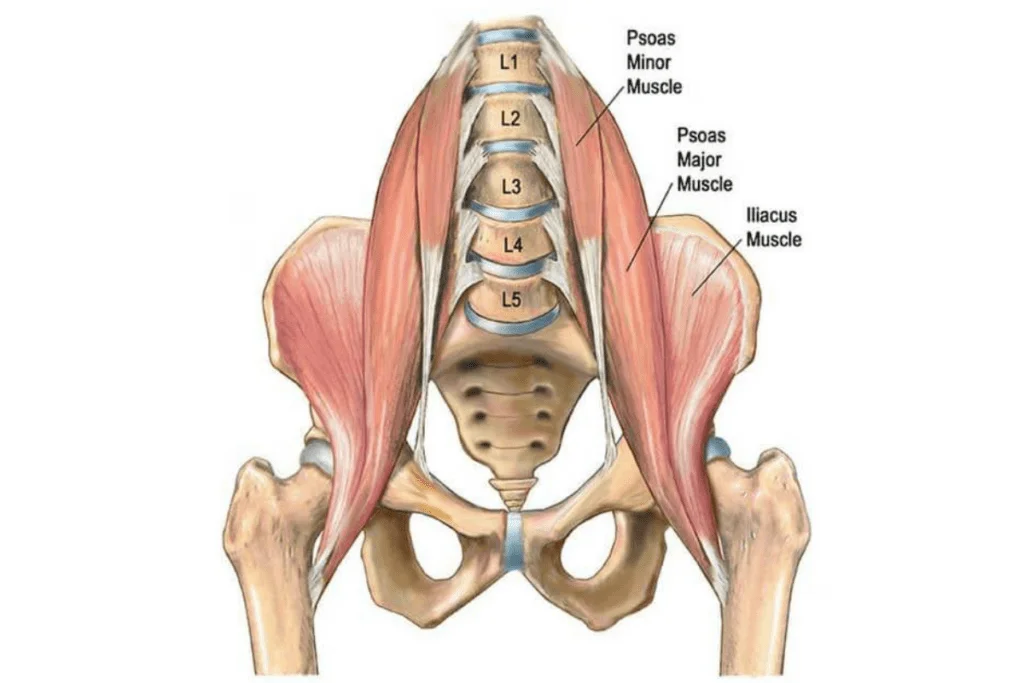
For example, if the deep stabilizing muscles of the spine and pelvis are not doing their job effectively, larger global muscles like the spinal extensors or hip flexors step in to create stiffness and control. You may not notice this during the lift, but later it can show up as back tightness or soreness. The tightness is not the problem itself. It is a sign that those larger muscles were working overtime to compensate for systems that fatigued too quickly.
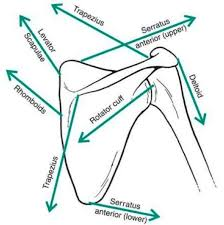
Similarly, shoulder or neck discomfort after training may reflect fatigued rotator cuff or scapular stabilizers, forcing the upper trapezius and neck muscles to take on more load than they should.
You did not feel the issue immediately because the body adapted in the moment. The sensation appears later when the borrowed capacity has to be paid back.
Why Pain Often Shows Up After You Stop Moving
Pain is frequently more noticeable at rest than during movement. Movement keeps blood flowing, tissues warm, and the nervous system engaged. When you stop moving, tissues cool down, fatigue remains, and your nervous system becomes more aware of internal signals.
This is why many people notice that walking or light movement feels fine, but sitting or lying down increases discomfort. This does not mean rest is harmful. It means your system is still processing the stress it was exposed to.
Latent Pain Is About Capacity, Not Damage
One of the most common fears we hear is whether delayed pain means something was damaged. In most cases, it does not.
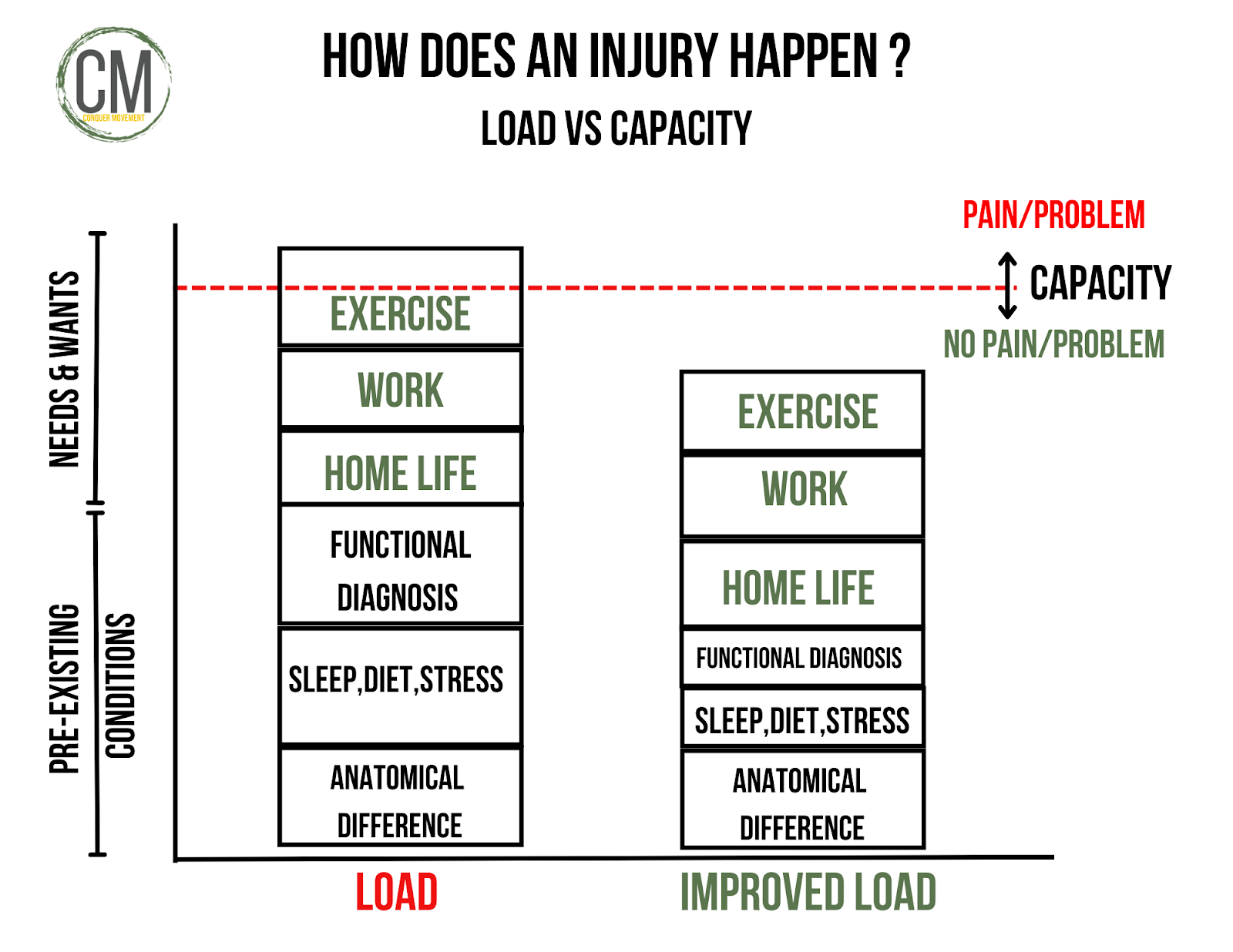
Latent pain usually reflects a temporary mismatch between how much load your body was exposed to and how much capacity it currently has to manage that load. Muscles may fatigue sooner than ideal, joints may rely on passive structures for longer periods of time, or load may not be shared evenly across the body.
If structural damage were the primary issue, pain would be more constant, progressively worsening, and less responsive to movement. Latent pain tends to fluctuate, and that variability is an important clue.
Why Imaging Often Does Not Explain Latent Pain
X-rays and MRIs are excellent at showing anatomy, but latent pain is largely about function. It is influenced by how load is distributed, how long tissues can tolerate stress, and how efficiently muscles coordinate under fatigue. These factors cannot be captured on imaging.
What This Means for Rehab and Training
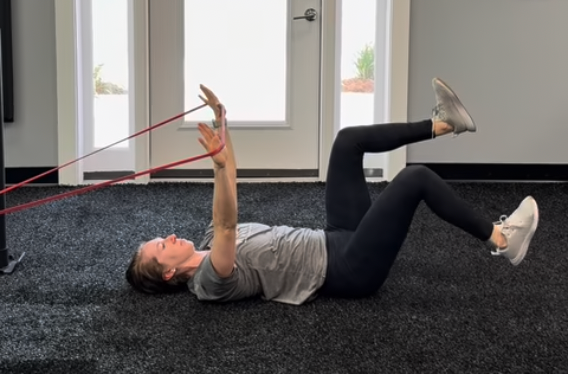
The goal when addressing latent pain is not to stop moving. It is to improve how your body manages load. That may mean building endurance in stabilizing muscles, improving movement efficiency, or adjusting training and recovery so you are not constantly borrowing from the same areas.

Progress does not always mean pain disappears immediately. It often looks like symptoms feel less intense or the same intensity under heavier loads, flare ups resolving more quickly, and interfering less with training and daily life.
The Big Takeaway
Latent pain is not a sign that your body is failing. It is a signal that something needs more capacity, better coordination, or more recovery.
At Conquer Movement, we use this type of feedback to guide rehab and performance strategies so you can keep training, adapting, and moving forward with confidence.
If you are dealing with pain that consistently shows up after activity and are unsure what it means, that is exactly the kind of problem we help people solve.
In good health,
Dr. Eliza Cohen
Performance Physical Therapist + Wellness Consultant
Wilmington, NC
Follow here for more performance and nutrition tips: @conquermovementpt @doctor_cohen14