
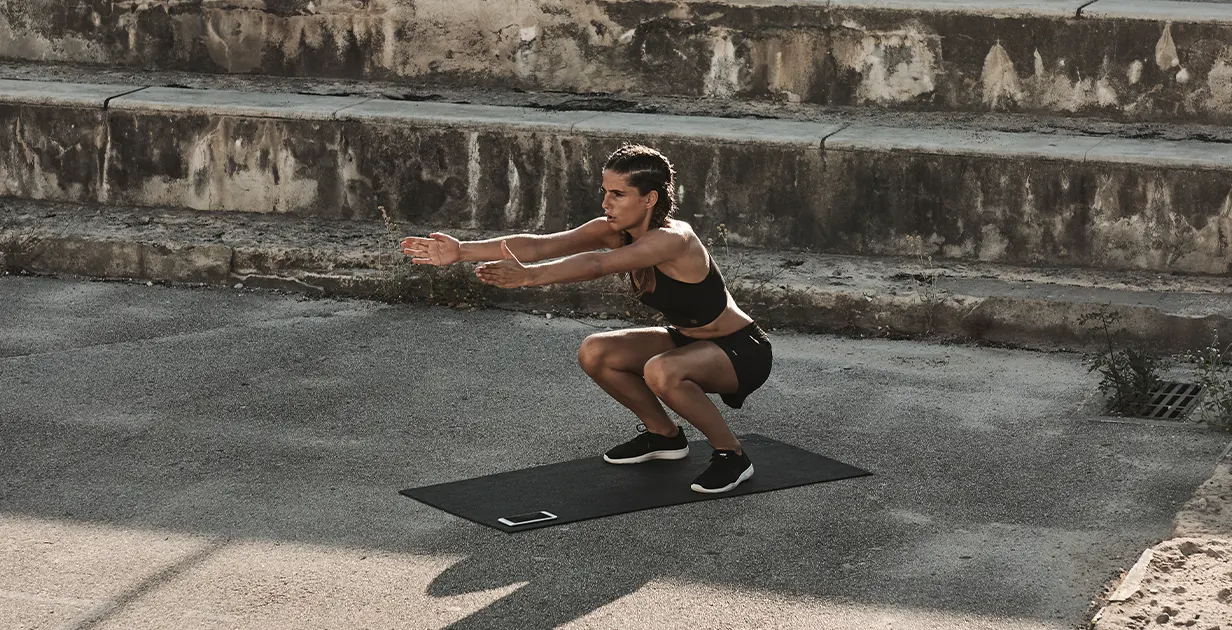
If you’ve ever walked away from a workout thinking, “Why do my hamstrings and low back feel smoked, but my glutes feel like they didn’t do anything?” you’re not alone.
“Glute activation” gets tossed around a lot, usually paired with cues like “squeeze harder” or “use your glutes.” The problem is, if it were that simple, this wouldn’t be such a common issue. Most of the time, it’s not that your glutes aren’t working hard enough, it’s that your body isn’t in a position where they can work efficiently in the first place.
Position vs Activation (It’s Not Just “Squeeze Harder”)
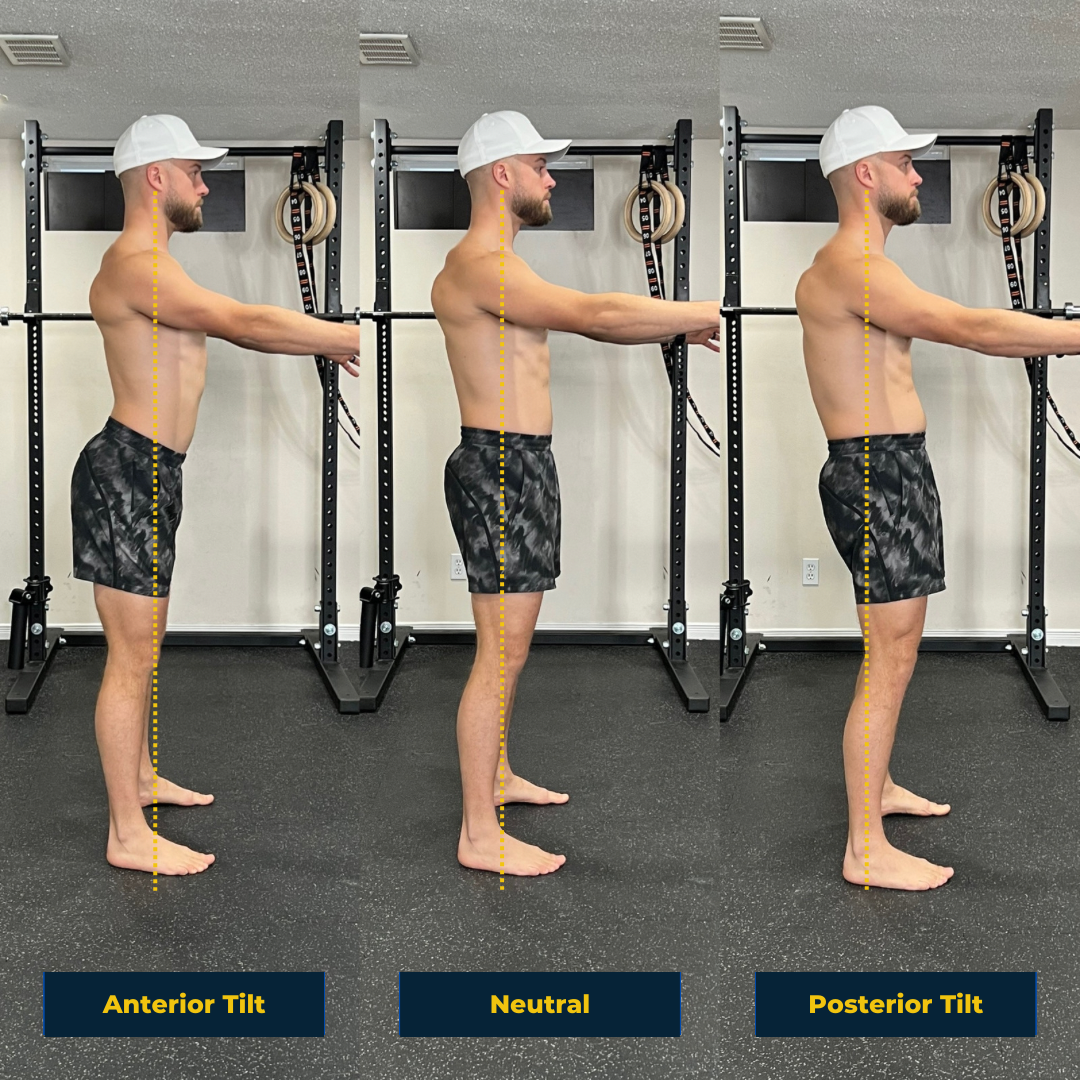
Your glutes depend heavily on the position of your pelvis and rib cage. If your pelvis is tipped forward and your ribs are flared up, your glutes are already at a mechanical disadvantage. From there, trying to “activate” them is an uphill battle.
Instead, your body will naturally shift the load to muscles that can produce force more easily in that position:
- Hamstrings
- Low back (lumbar extensors)
This is why you can do all the bridges and banded walks in the world and still feel the wrong areas working. Without the right position, activation cues don’t land the way they’re supposed to.
Why Glutes Often Have Poor Proprioception
A big part of the problem is awareness. The glutes are large, powerful muscles, but they’re also deep and often underutilized in day-to-day life. Sitting, repetitive training patterns, and previous injuries can all reduce your brain’s ability to sense and coordinate them effectively.
So when someone says, “I just can’t feel my glutes,” it’s usually not a true strength issue, it’s a coordination issue.
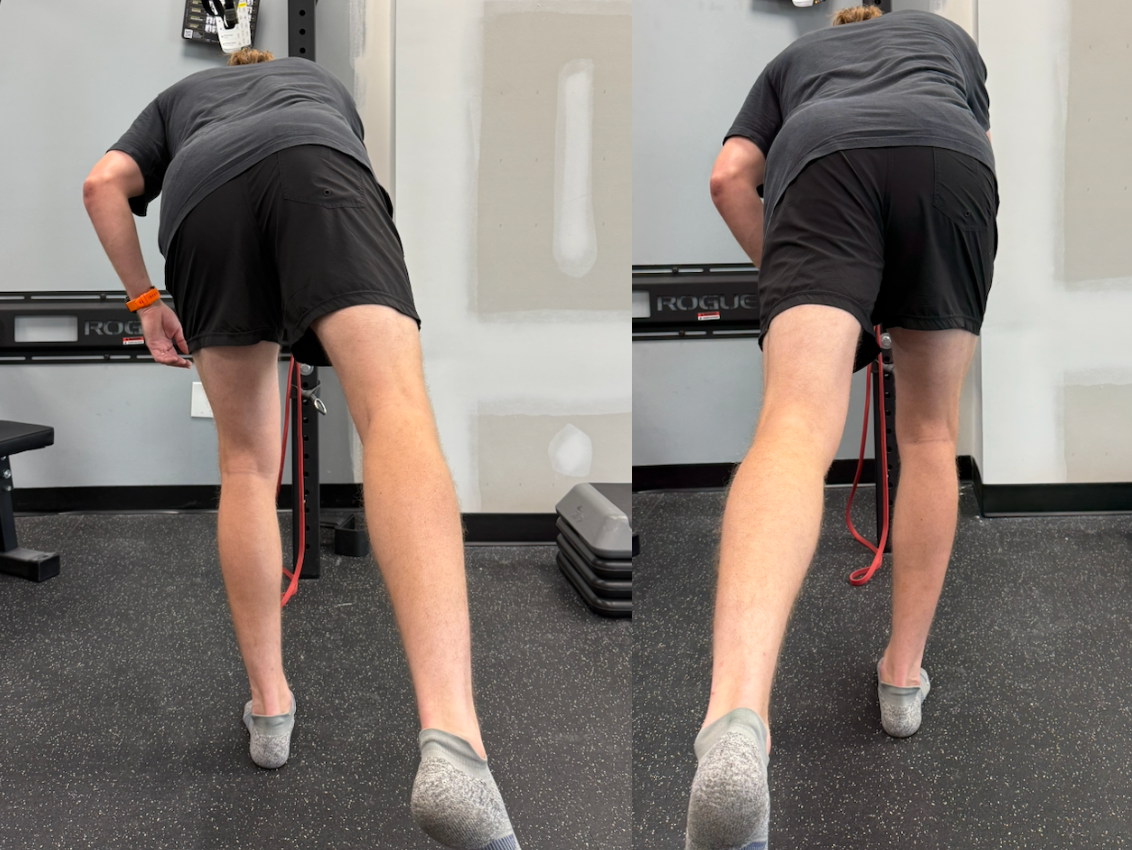
We see this clearly in the clinic when we assess something like a hip airplane. When we compare side to side, the weaker side (which isn’t always the painful side) typically has a much harder time finding and maintaining a neutral position. That tells us the brain doesn’t have a great map of that hip yet, and loading it heavily without addressing that first usually just reinforces compensation patterns.
The Pelvis + Rib Cage Relationship
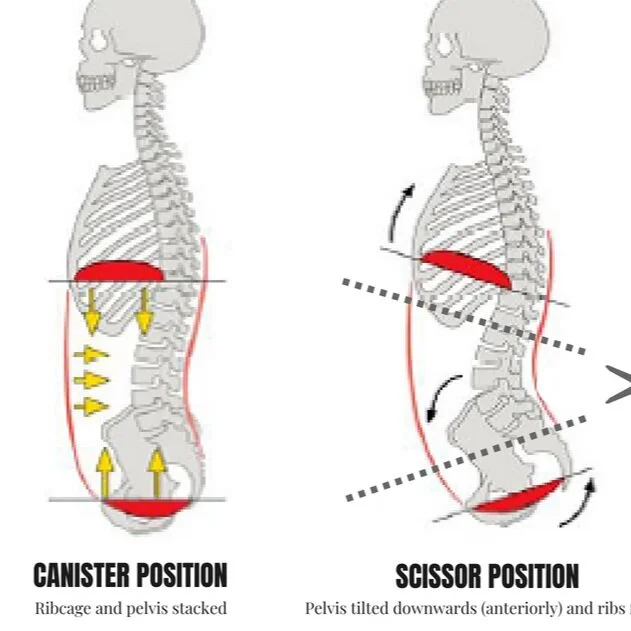
In the clinic, we often refer to this as “canister position.” When your rib cage is stacked over your pelvis, your core can create a stable base and your glutes have the leverage they need to contribute to movement.
When that relationship is off, everything downstream changes. Ribs flare, the pelvis tips forward, and the system loses efficiency. The low back steps in to stabilize, the hamstrings assist more than they should, and the glutes become less involved.
This is why positioning isn’t just a detail, it’s the foundation.
Common Compensation Patterns
If the glutes aren’t doing their job, something else will pick up the slack. The body is incredibly adept at finding a way to get the task done, even if it’s not the most efficient strategy.
Some of the most common patterns we see:
Hamstring dominance
- You feel hinges, bridges, or deadlifts mostly in your hamstrings
- Hamstring cramping during exercises that are supposed to target your glute
- A constant sense of “tightness” in the back of your legs
Low back overuse
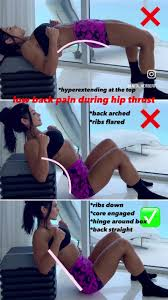
- Deadlifts or hip thrusts light up your low back (during and/or after)
- You tend to arch aggressively to create movement
- Difficulty controlling pelvic position
Quad dominance
- During squats, feeling all quads, no glutes
- Knees drive forward without meaningful hip loading
- You stay very upright and never really sit into the hips
None of these are inherently “wrong,” but they’re often signs that the glutes aren’t contributing the way we want them to.
How to Fix It: A Smarter Progression
Fixing this isn’t about doing more random activation drills or chasing a burn. It’s about building a progression that restores position, improves awareness, and then carries that into real movement. Another piece that often gets overlooked is the strong connection between your big toe, your arch, and your glutes. This quote from Mark Sisson has stuck with me, “great toe, great ass.” If you can’t create a stable foot, it becomes much harder to control the knee and hip. When the foot collapses or the big toe loses contact, the entire chain above it becomes less stable, and the glutes lose some of their ability to do their job.
With that in mind, here’s how we typically build things back up:
Phase 1: Isolation, Rebuilding the Connection
The goal here is to improve proprioception and give you a clear sense of what it actually feels like to use your glutes.
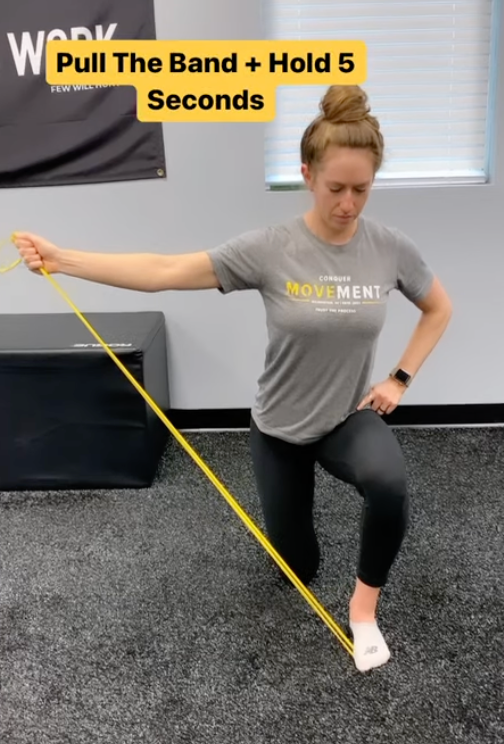
- Focus on rib cage and pelvis control first
- Slow the movement down
- Learn the “short foot” position
- Prioritize quality over fatigue
Common starting points:
- Half kneeling short foot
- Side-lying hip work (yes, clamshells done correctly can be super effective here)
- Quadruped hip extension
This phase is less about getting a burn and more about creating clarity. If you can’t feel your glutes here, they won’t magically show up under load.
Phase 2: Integration, Coordinating the System
Once you can find your glutes in simpler positions, the next step is teaching them to work with the rest of your body.
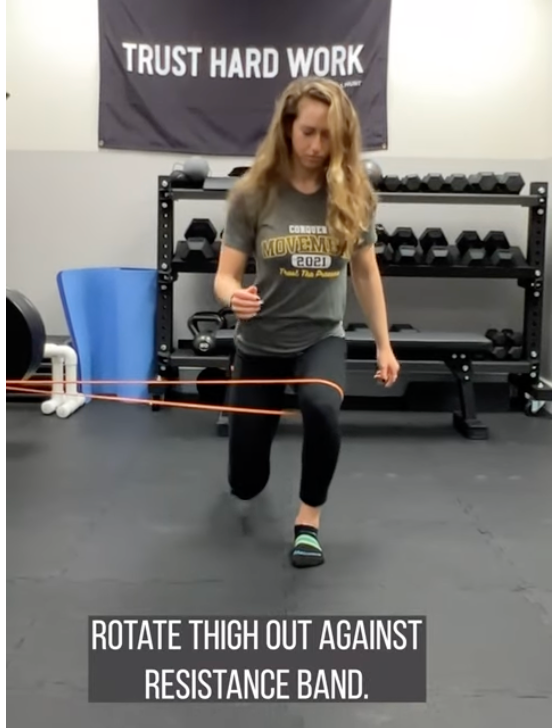
- Introduce single-leg stability
- Maintain pelvic control through movement
- Start challenging balance and coordination
Examples:
- RNT Split squats
- Hip airplanes
- Single-leg RDLs
This is where a lot of people get exposed. The moment you remove stability or add complexity, compensation patterns tend to show up. That’s not a failure, it’s useful feedback.
Phase 3: Loaded Movement, Make It Stick
Lastly we can apply it to heavy loads, think dead lifts, squats and hip thrusts.
At this stage, the goal isn’t just to “feel” your glutes, it’s to use them effectively without losing position. Load simply amplifies whatever strategy you bring into the movement, so if you’ve built a good foundation, this is where it pays off.
If you zoom out, the inability to feel your glutes is rarely about them being weak or inactive. It’s usually a mix of poor positioning, decreased awareness, and compensation patterns that have developed over time.
When you address those pieces and follow a structured progression, the glutes tend to come back online quickly. And when they do, everything from performance to nagging aches and pains tends to improve right along with them.
In good health,
Dr. Eliza Cohen
Performance Physical Therapist + Wellness Consultant
Wilmington, NC
Follow here for more performance and nutrition tips: @conquermovementpt @doctor_cohen14