

When most people think about strength training, they think in terms of individual muscles: glutes, core, shoulders, or hamstrings. While isolated muscle strength has value, your body does not actually move or produce force one muscle at a time.
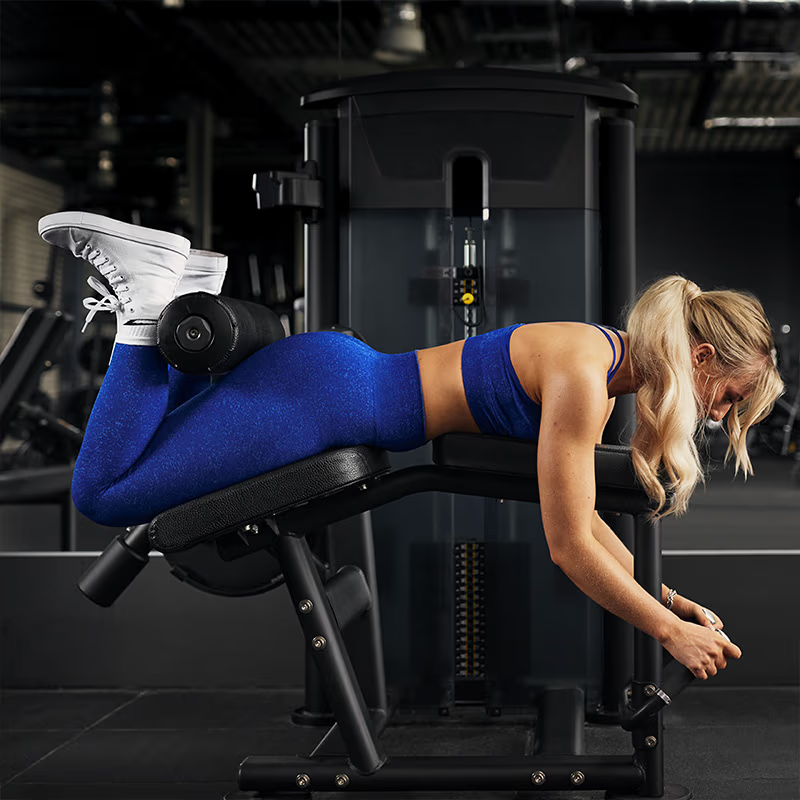
Instead, movement is organized through anatomical slings. These are interconnected systems of muscles and connective tissue that work together to transfer force efficiently across the body.
Understanding and training these slings is a key part of how we approach performance rehab at Conquer Movement, especially for athletes who want to lift heavy, move well, and stay resilient.
What Are Anatomical Slings?
Anatomical slings are groups of muscles connected through fascia that function together to create stability, control, and force transfer during movement. Rather than acting in isolation, these muscles are neurologically and mechanically linked, allowing energy to move from one region of the body to another.
In simple terms, slings are how your body coordinates movement between the upper body, lower body, and trunk.
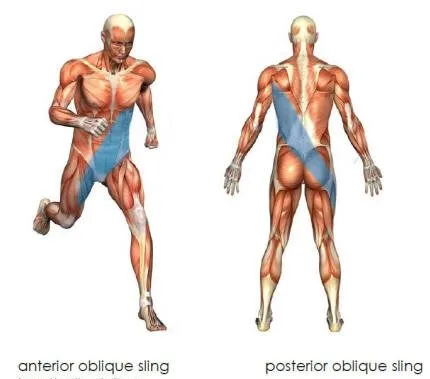
The Key Anatomical Slings and Their Muscles
The Posterior Oblique Sling
The posterior oblique sling is one of the most important systems for rotational control and load transfer.
It includes:
- Latissimus dorsi
- Contralateral (opposite side) gluteus maximus
- Thoracolumbar fascia
- Erector spinae (as a stabilizing contributor)
This sling plays a major role in activities like running, lifting, throwing, and any movement that requires force to travel diagonally across the body.
The Anterior Oblique Sling
The anterior oblique sling helps control trunk rotation and stabilize the pelvis during movement.
It includes:
- External oblique
- Internal oblique
- Contralateral adductor complex
- Rectus abdominis (as a force transmitter)
This sling is especially important for deceleration, change of direction, and maintaining pelvic control during single-leg tasks.
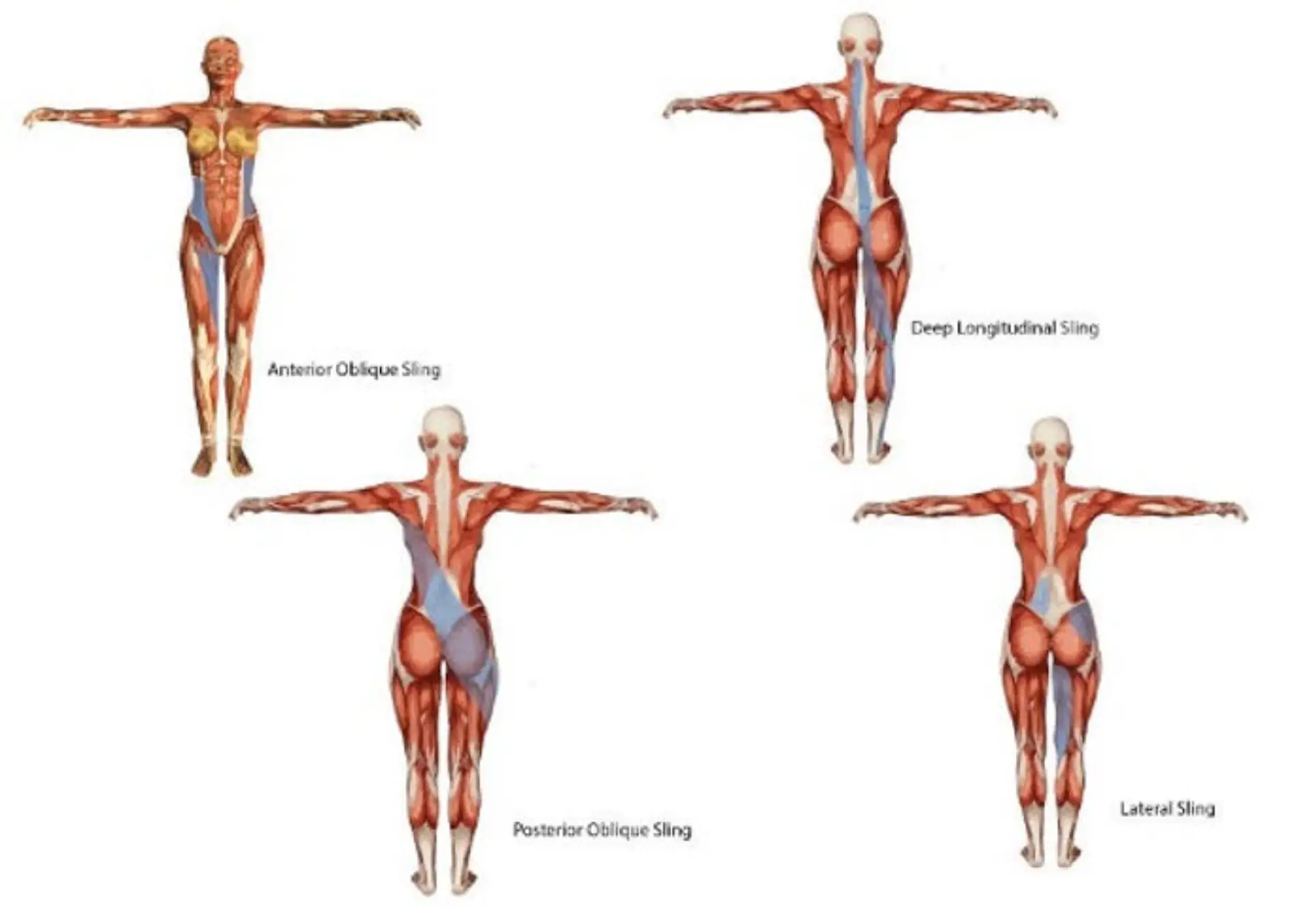
The Lateral Sling
The lateral sling is essential for frontal-plane (side to side) stability and single-leg control.
It includes:
- Gluteus medius (side butt) and minimus
- Adductor complex of the stance leg
- Quadratus lumborum (opposite)
This sling helps prevent excessive pelvic drop and trunk sway during walking, running, and single-leg loading. Check out my recent blog focused on the adductors for more information about why this is so important!
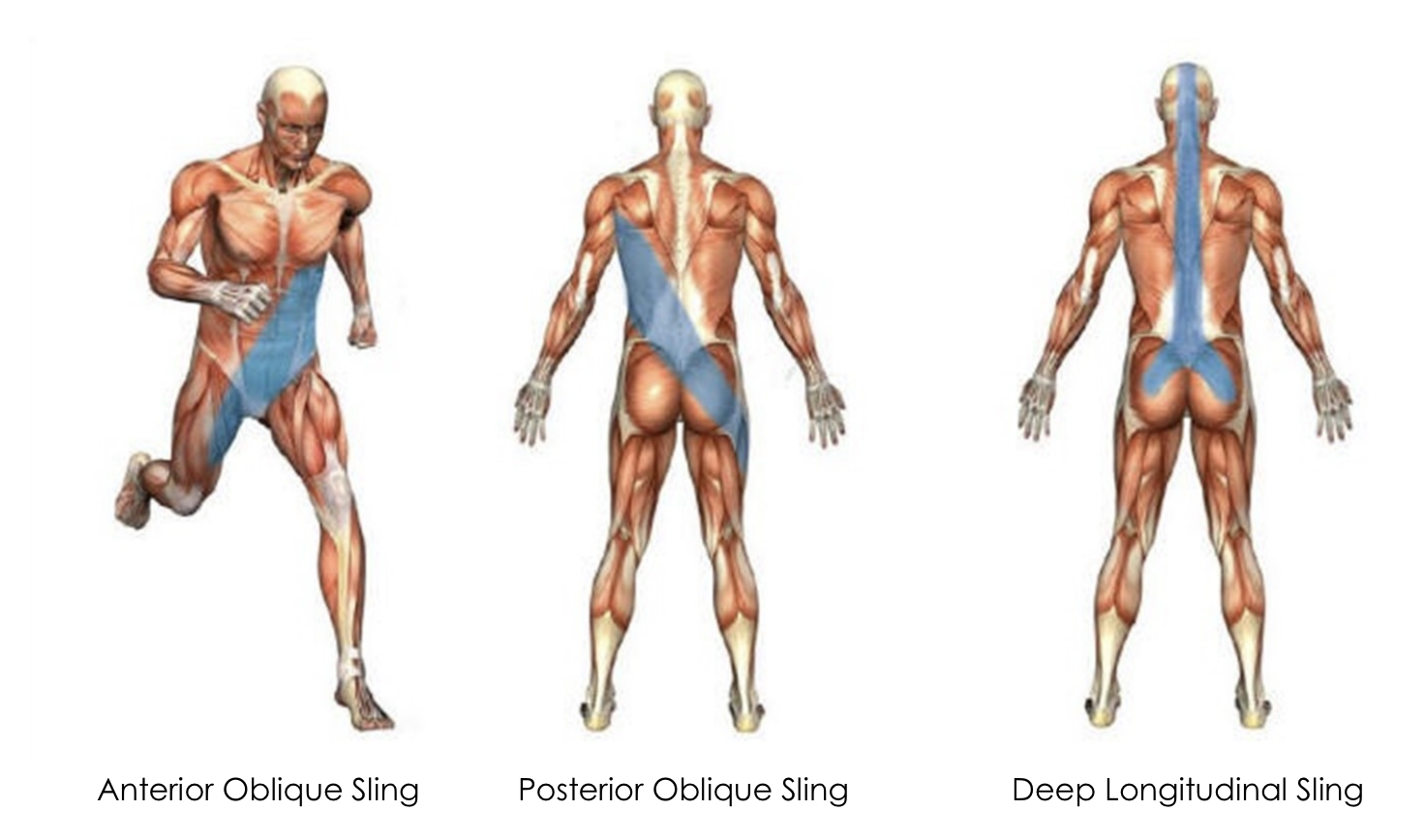
The Deep Longitudinal Sling
The deep longitudinal sling helps manage force between the foot, pelvis, and spine.
It includes:
- Erector spinae
- Thoracolumbar fascia
- Sacrotuberous ligament
- Hamstrings, particularly the biceps femoris
- Peroneals and tibialis posterior
This sling is critical for absorbing ground reaction forces and providing stiffness during gait and hinging movements.
Why Anatomical Slings Are So Functional
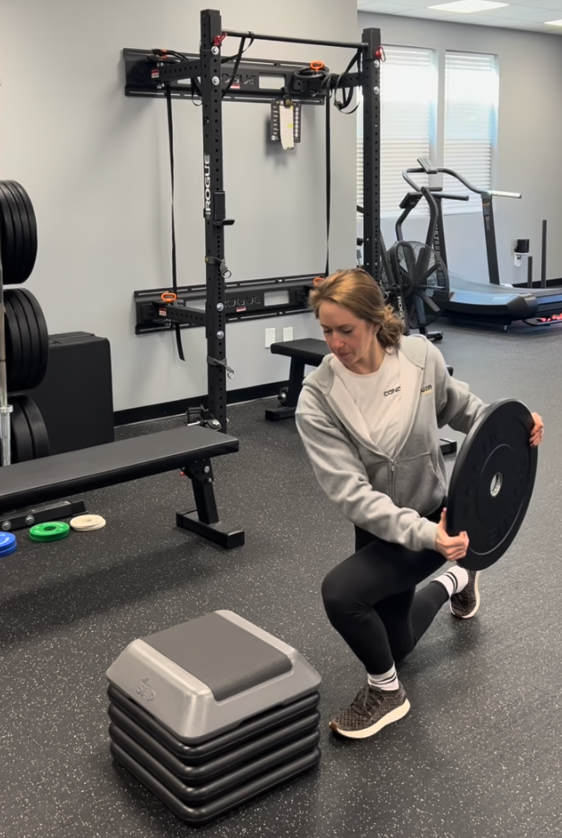
Anatomical slings allow your body to distribute load rather than concentrating stress in one area. When slings function well, force is transferred smoothly through the trunk and limbs, reducing unnecessary strain on joints and passive structures.
If a sling is underperforming or fatigues quickly, the body compensates by increasing stiffness elsewhere. This often shows up as back tightness, hip discomfort, or shoulder strain, especially later in a workout or after training. In other words, anatomical slings are a major reason why strength does not always equal resilience.
Why Slings Must Be Trained Alongside Compound Lifts
Compound lifts like squats, deadlifts, presses are the foundation of building raw strength, power, and overall athletic performance. These lifts engage multiple joints and muscle groups simultaneously and naturally recruit anatomical slings. However, performing these lifts alone assumes that the slings have sufficient endurance, coordination, and timing to handle the load efficiently.
By combining targeted sling training with compound lifts, athletes build both capacity in the slings and overall strength, allowing force to transfer efficiently, improving trunk and joint stability, reducing compensatory patterns, and increasing tolerance to higher volumes and heavier loads.
How We Train Anatomical Slings in Performance Rehab
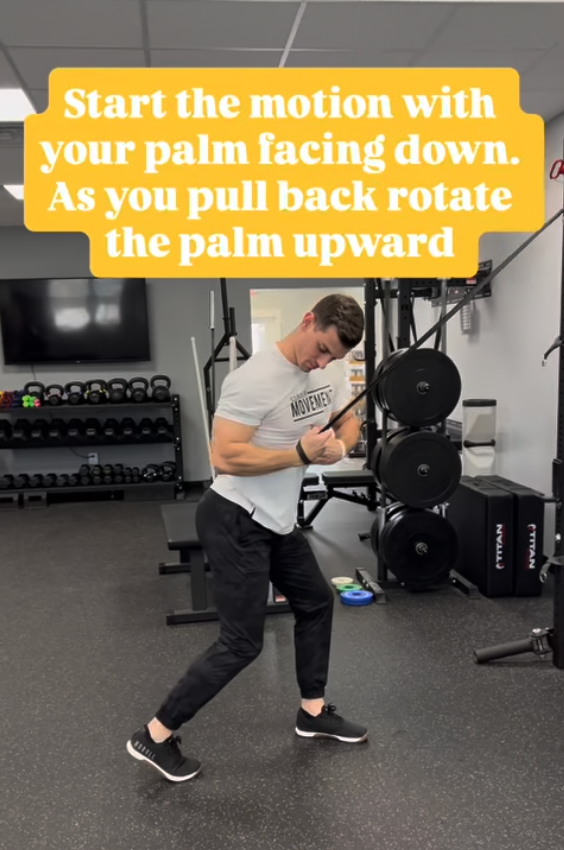
At Conquer Movement, sling-based training is integrated intentionally, not randomly. We use it to reinforce better movement patterns and support compound strength work.
Examples may include:
- Split-stance or single-leg hinge variations with contralateral loading to reinforce the posterior oblique sling
- Rotational cable or banded lifts emphasizing controlled trunk rotation for the anterior oblique sling

- Lateral carries, step-downs, or offset loading to challenge the lateral sling
These exercises are often layered before or after compound lifts to improve how force is transferred when it matters most.
Common Signs a Sling Isn’t Doing Its Job
You may not always feel pain immediately, but there are subtle signs that one or more slings are underperforming. These include:
- Inconsistent or uneven strength during lifts
- Fatigue or soreness in areas compensating for weak stabilizers, such as the lower back or neck
- Excessive sway or pelvic drop during single-leg exercises
- Feeling unstable when transitioning between movements or changing direction
- Pain or tightness that appears later in workouts rather than during them
Recognizing these signs early allows us to target the underlying sling deficiencies before they lead to injury or performance setbacks.
The Big Takeaway
Anatomical slings are how your body truly produces and controls force. Training them alongside compound lifts improves efficiency, resilience, and long-term performance.
At Conquer Movement, we do not separate rehab from strength. We use sling-based strategies to support the demands of real training so you can lift, run, and move with confidence.
If you are dealing with recurring pain, inconsistent performance, or symptoms that show up after training, evaluating how your anatomical slings are functioning may be a critical missing piece.
In good health,
Dr. Eliza Cohen
Performance Physical Therapist + Wellness Consultant
Wilmington, NC
Follow here for more performance and nutrition tips: @conquermovementpt @doctor_cohen14